
Complete Ragdoll Cat Breed Information
Complete Ragdoll Cat Breed Information
The Ragdoll cat is one of the most popular large domestic cat breeds, known for its beautiful blue eyes, semi-long coat, gentle temperament, and affectionate nature. Ragdolls are often described as calm, social, and people-oriented cats that enjoy spending time with their families.
Ragdoll Cat Overview
Ragdolls are a large, slow-maturing breed originally developed in the United States. They are recognized for their substantial size, soft coat, striking color-point patterns, and relaxed personality.
Unlike some highly independent cat breeds, Ragdolls generally enjoy human companionship and often follow their owners around the home. Many are happy to sit beside their families, receive attention, and participate in everyday household activities.
Quick Ragdoll Breed Facts
- Breed: Ragdoll
- Origin: United States
- Size: Large
- Body type: Substantial, muscular, semi-longhaired
- Eyes: Blue
- Coat: Soft, silky, semi-long
- Temperament: Gentle, affectionate, social, relaxed
- Activity level: Moderate
- Lifespan: Commonly around 12–18 years, with individual variation
- Maturity: Slow to fully mature
- Best suited for: Families, couples, singles, and households looking for a companion cat
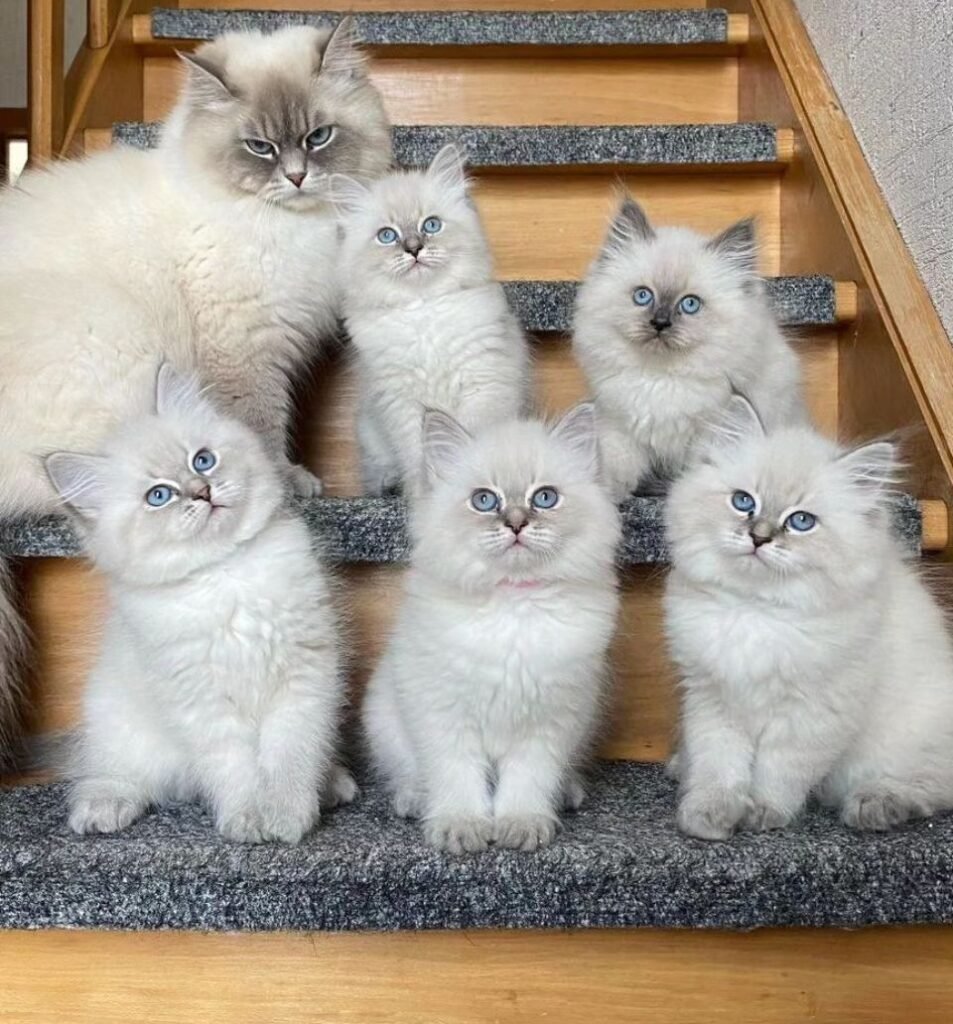
The Ragdoll cat is one of the most popular large domestic cat breeds, known for its beautiful blue eyes, semi-long coat, gentle temperament, and affectionate nature. Ragdolls are often described as calm, social, and people-oriented cats that enjoy spending time with their families.
Ragdoll Cat Overview
Ragdolls are a large, slow-maturing breed originally developed in the United States. They are recognized for their substantial size, soft coat, striking color-point patterns, and relaxed personality.
Unlike some highly independent cat breeds, Ragdolls generally enjoy human companionship and often follow their owners around the home. Many are happy to sit beside their families, receive attention, and participate in everyday household activities.
Quick Ragdoll Breed Facts
- Breed: Ragdoll
- Origin: United States
- Size: Large
- Body type: Substantial, muscular, semi-longhaired
- Eyes: Blue
- Coat: Soft, silky, semi-long
- Temperament: Gentle, affectionate, social, relaxed
- Activity level: Moderate
- Lifespan: Commonly around 12–18 years, with individual variation
- Maturity: Slow to fully mature
- Best suited for: Families, couples, singles, and households looking for a companion cat
Ragdoll Appearance
Ragdolls are particularly recognizable because of their combination of size, color-point markings, blue eyes, and soft semi-long coat.
A mature Ragdoll typically has a broad chest, sturdy bone structure, large paws, and a long body. Their hindquarters may sit slightly higher than their shoulders, contributing to their distinctive profile.
Their coat is generally softer and less prone to severe matting than that of some other long-haired breeds, although regular grooming is still important.
Ragdoll Eyes
One of the defining characteristics of the Ragdoll breed is its blue eyes. Eye color can range from lighter blue shades to deeper, more intense blue.
The intensity of eye color can vary between individual cats, but blue eyes are an important characteristic of the traditional Ragdoll breed standard.
Ragdoll Coat Colors and Patterns
Ragdolls are available in several recognized colors and patterns. Common patterns include:
Colorpoint
The classic color-point pattern features a lighter body with darker coloration on the ears, face, legs, and tail.
Mitted
Mitted Ragdolls have darker points combined with lighter-colored paws that resemble little mittens. They may also have a white chin and chest.
Bicolor
Bicolor Ragdolls have more extensive white markings, particularly on the face, chest, legs, and underside of the body.
Lynx
Lynx Ragdolls have tabby-like striping incorporated into their point coloration.
Tortie
Tortie Ragdolls display a mixture of color in their points, producing a distinctive tortoiseshell appearance.
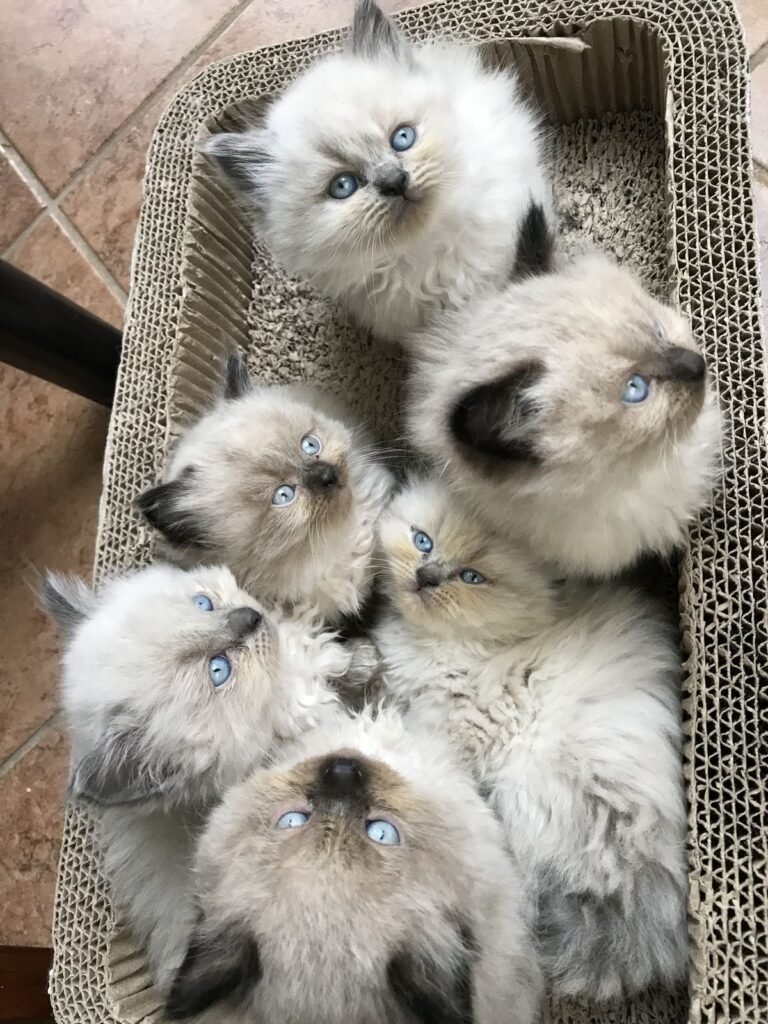
Because Ragdoll kittens are born relatively light in color, their point coloration generally becomes more apparent as they mature.
Ragdoll Appearance
Ragdolls are particularly recognizable because of their combination of size, color-point markings, blue eyes, and soft semi-long coat.
A mature Ragdoll typically has a broad chest, sturdy bone structure, large paws, and a long body. Their hindquarters may sit slightly higher than their shoulders, contributing to their distinctive profile.
Their coat is generally softer and less prone to severe matting than that of some other long-haired breeds, although regular grooming is still important.
Ragdoll Eyes
One of the defining characteristics of the Ragdoll breed is its blue eyes. Eye color can range from lighter blue shades to deeper, more intense blue.
The intensity of eye color can vary between individual cats, but blue eyes are an important characteristic of the traditional Ragdoll breed standard.
Ragdoll Coat Colors and Patterns
Ragdolls are available in several recognized colors and patterns. Common patterns include:
Colorpoint
The classic color-point pattern features a lighter body with darker coloration on the ears, face, legs, and tail.
Mitted
Mitted Ragdolls have darker points combined with lighter-colored paws that resemble little mittens. They may also have a white chin and chest.
Bicolor
Bicolor Ragdolls have more extensive white markings, particularly on the face, chest, legs, and underside of the body.
Lynx
Lynx Ragdolls have tabby-like striping incorporated into their point coloration.
Tortie
Tortie Ragdolls display a mixture of color in their points, producing a distinctive tortoiseshell appearance.
Because Ragdoll kittens are born relatively light in color, their point coloration generally becomes more apparent as they mature.
Ragdoll Grooming Requirements
Although Ragdolls have semi-long hair, their grooming requirements are manageable with a consistent routine.
Brushing approximately two to three times per week can help remove loose hair, reduce tangles, and keep the coat looking healthy. Some cats may require more frequent grooming during periods of increased shedding.
Pay particular attention to:
- Around the neck
- Behind the ears
- Under the front legs
- Around the hind legs
- The belly
- The tail
Regular nail trimming and dental care should also be part of a Ragdoll’s routine.
Ragdoll Shedding
Ragdolls do shed. Their semi-long coats can leave loose hair around the home, particularly during seasonal shedding periods.
Regular brushing can significantly reduce loose fur and help prevent hair from accumulating on furniture and bedding.
No cat breed should be advertised as completely non-shedding.
Ragdoll Grooming Requirements
Although Ragdolls have semi-long hair, their grooming requirements are manageable with a consistent routine.
Brushing approximately two to three times per week can help remove loose hair, reduce tangles, and keep the coat looking healthy. Some cats may require more frequent grooming during periods of increased shedding.
Pay particular attention to:
- Around the neck
- Behind the ears
- Under the front legs
- Around the hind legs
- The belly
- The tail
Regular nail trimming and dental care should also be part of a Ragdoll’s routine.
Ragdoll Shedding
Ragdolls do shed. Their semi-long coats can leave loose hair around the home, particularly during seasonal shedding periods.
Regular brushing can significantly reduce loose fur and help prevent hair from accumulating on furniture and bedding.
No cat breed should be advertised as completely non-shedding.
Preparing Your Home for a Ragdoll Kitten
Before bringing a Ragdoll kitten home, prepare a safe and comfortable environment.
Essential supplies include:
- Quality kitten food
- Food and water bowls
- Litter box and appropriate litter
- Comfortable sleeping area
- Scratching post
- Toys
- Grooming brush
- Nail clippers
- Cat carrier
- Identification information
- Safe climbing or resting areas
The kitten should have a quiet area where it can settle during its first few days.
Ragdoll Cats as Indoor Companions
Ragdolls are often well suited to indoor living. Keeping a cat indoors can reduce exposure to traffic, predators, infectious diseases, and other outdoor hazards.
An enriched indoor environment should provide opportunities for climbing, scratching, playing, resting, and observing its surroundings.
Secure windows and doors are particularly important when caring for an indoor cat.
Ragdoll Lifespan
With appropriate nutrition, veterinary care, a safe environment, and responsible breeding, many Ragdolls can enjoy long lives.
Individual lifespan varies considerably, and genetics, healthcare, nutrition, lifestyle, and environmental factors all contribute to a cat’s longevity.
Preparing Your Home for a Ragdoll Kitten
Before bringing a Ragdoll kitten home, prepare a safe and comfortable environment.
Essential supplies include:
- Quality kitten food
- Food and water bowls
- Litter box and appropriate litter
- Comfortable sleeping area
- Scratching post
- Toys
- Grooming brush
- Nail clippers
- Cat carrier
- Identification information
- Safe climbing or resting areas
The kitten should have a quiet area where it can settle during its first few days.
Ragdoll Cats as Indoor Companions
Ragdolls are often well suited to indoor living. Keeping a cat indoors can reduce exposure to traffic, predators, infectious diseases, and other outdoor hazards.
An enriched indoor environment should provide opportunities for climbing, scratching, playing, resting, and observing its surroundings.
Secure windows and doors are particularly important when caring for an indoor cat.
Ragdoll Lifespan
With appropriate nutrition, veterinary care, a safe environment, and responsible breeding, many Ragdolls can enjoy long lives.
Individual lifespan varies considerably, and genetics, healthcare, nutrition, lifestyle, and environmental factors all contribute to a cat’s longevity.